

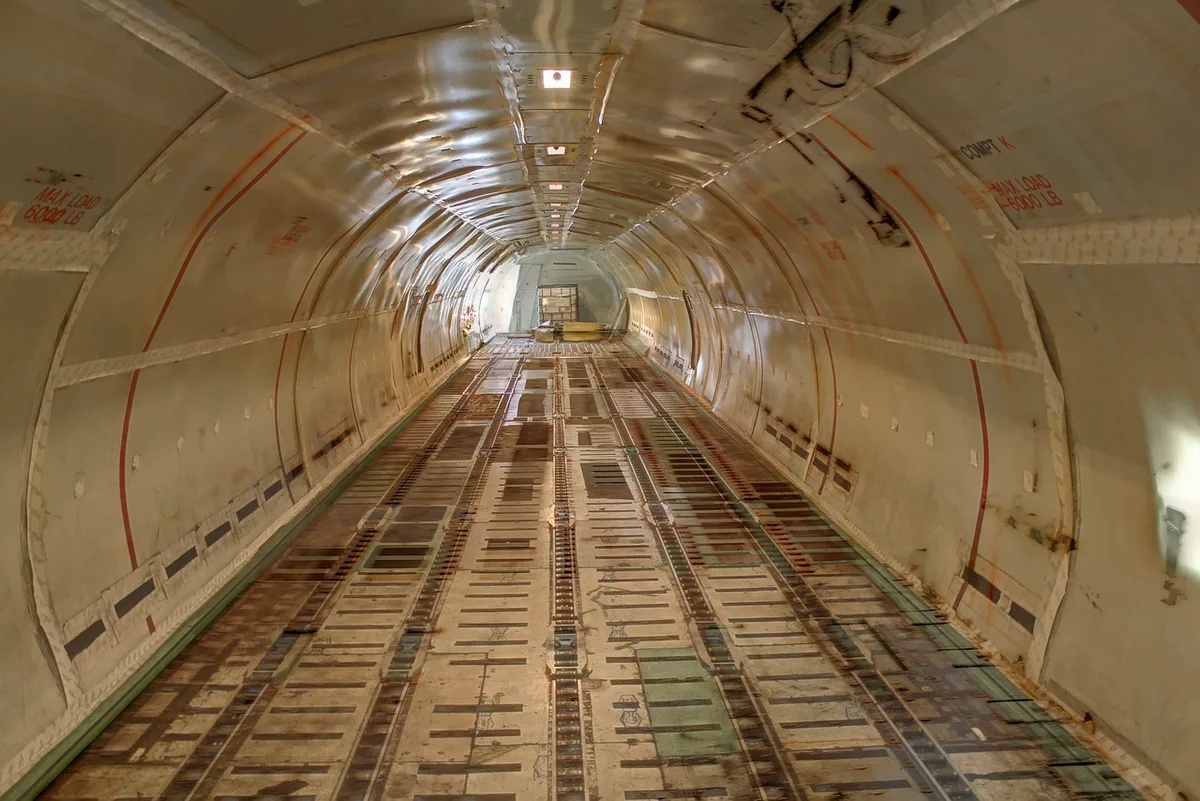
There are two different types of aircraft that accept the transport of goods. These are classic passenger planes (PAX) on the one hand and cargo planes or transport planes (freighter), transporting only goods and equipment.
70-80% of goods that do not have any particular restrictions are carried in the holds of passenger aircraft.
What are the differences between cargo planes and passenger planes?
The main difference for shippers to remember is the height of the holds of passenger aircraft. Indeed, located on the lower deck, it is 160 centimeters for long-haul flights. Any pallet taller than 160 centimeters will therefore have to travel in a cargo plane.
Width and length restrictions are also applied. They vary according to the type of aircraft used. For example, on short to medium haul flights, the restrictions are stronger with maximum dimensions of 120x100x110 and 250kg per piece.
Cargo aircraft bunkers, which can be located on the main deck as well as on the lower deck, are 2 to 4.5 meters high and therefore allow the transport of larger goods.
As prices may be higher on cargo planes, especially for small lots, due to less regular rotations, it is preferable to provide pallets less than 160 centimeters high in order to limit transport costs.
Cargo planes that are less restrictive for your dangerous goods
Cargo aircraft therefore have two main advantages:
- They cover the transport of goods with large dimensions.
- They allow the transport of certain dangerous materials or regulated products that are prohibited on passenger flights.
In fact, in the IATA dangerous goods regulations, there are two types of products:
- “CAO - Cargo Aircraft Only” goods, accepted only on cargo flights.
- “OK PAX” goods, accepted in the holds of passenger planes and on cargo flights.
This classification depends on the UN code, the gross weight of associated goods, and the weight of dangerous goods per package. It is also necessary to provide information on the declaration of dangerous (DGD).
💡 To go further in transporting dangerous goods by air, you can consult this article: Example of lithium batteries
For any questions about the 2 types of aircraft, you can contact josephine@ovrsea.com.